How to Become an Aircraft Mechanic: The FAA A&P Certificate, Schools and Tests
How to become an aircraft mechanic: FAA A&P eligibility, Part 147 school vs. 18 or 30 months of experience, the three knowledge tests, oral and practical exams.
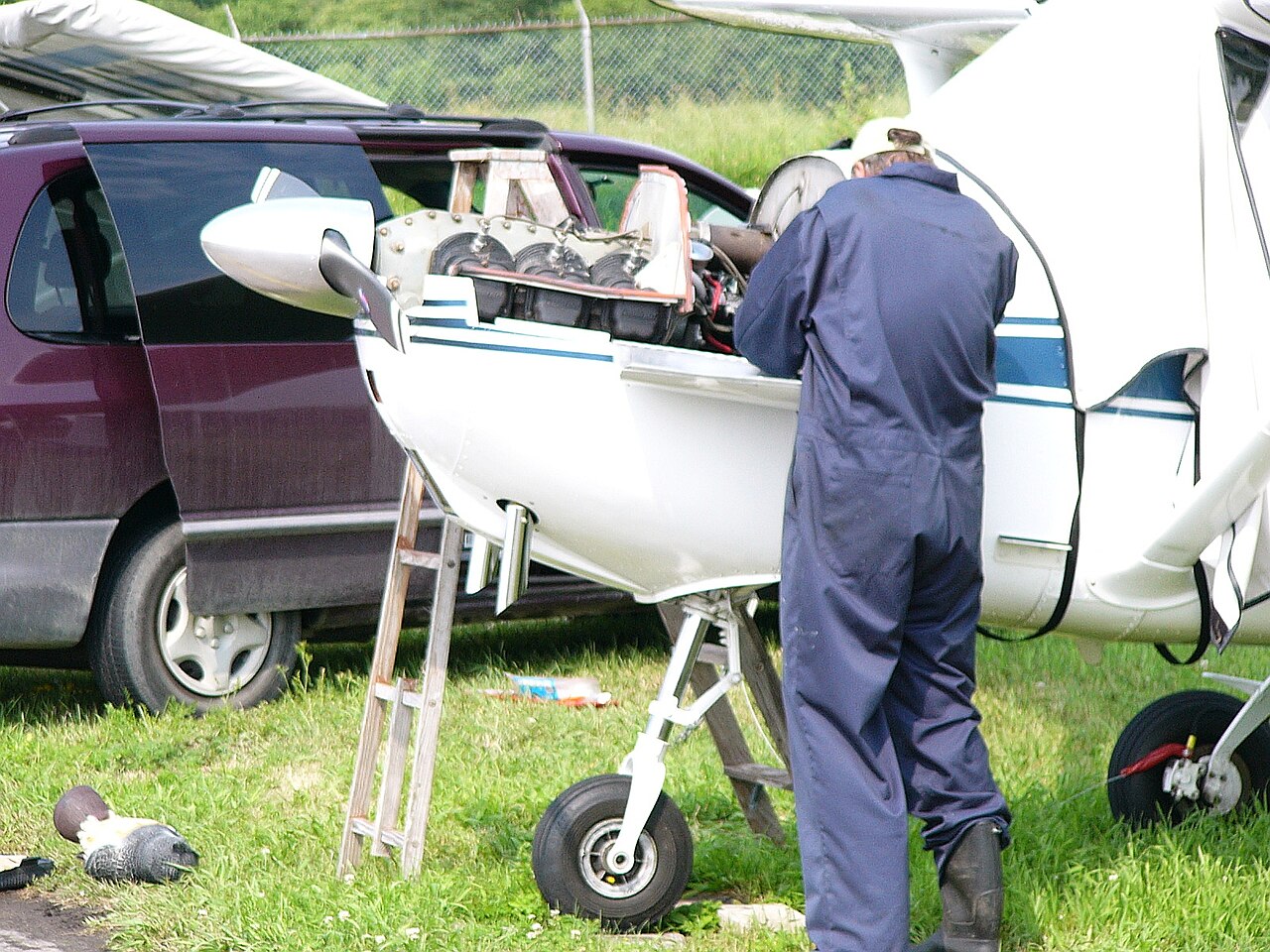
To become an aircraft mechanic in the United States, you earn an FAA mechanic certificate with an Airframe rating, a Powerplant rating or both, which together are called the A&P. You qualify either by graduating from an FAA-certificated aviation maintenance technician school or by documenting at least 18 months of practical experience for one rating, or 30 months for both, and then you pass written, oral and practical tests.
The rules sit in Title 14 of the Code of Federal Regulations, Part 65, Subpart D, and they are short and specific. The real decision is how you build the required training or experience, since the tests at the end are the same for everyone.
Aircraft mechanic requirements under FAA rules
Under 14 CFR 65.71, an applicant for a mechanic certificate must:
- be at least 18 years old;
- be able to read, write, speak and understand English;
- pass all the required tests within a 24-month period.
The rule sets no college degree requirement and no upper age limit. The FAA treats the two ratings separately: the Powerplant rating is for engines and propellers, and the Airframe rating is for the rest of the aircraft. You can hold just one, but a mechanic who holds both can work on a whole aircraft, and that pairing is what "A&P" means.
School or experience: comparing the routes
Section 65.77 gives two ways to show you are ready to test, and the FAA also recognizes a military program.
| Route | What you need | Notes |
|---|---|---|
| FAA-certificated school (Part 147) | Graduation, shown by a document the school issues | Classroom and shop training built around FAA testing standards |
| Civilian experience | 18 months of practical experience for one rating, or 30 months doing both airframe and powerplant work at the same time | Experience must be documented to the FAA's satisfaction |
| Military | Completion of the Joint Service Aviation Maintenance Technician Certification Council (JSAMTCC) course | For service members in qualifying aviation maintenance jobs |
The school route is structured and predictable. You attend classes, practice in a shop on real engines and airframe components, and graduate with paperwork the FAA accepts. Schools run under 14 CFR Part 147. Under the current version of that rule, each school's curriculum must be designed to continually align with the FAA's mechanic Airman Certification Standards (ACS), the document that defines what the tests cover. Human factors, meaning how fatigue, poor communication and skipped procedures lead to maintenance errors, is part of those standards.
The experience route suits people already working around aircraft, for example at a repair station or a fixed-base operator, under the supervision of certificated mechanics. The catch is documentation. Pay stubs alone do not show what kind of work you did, so keep a detailed log of tasks, aircraft types and dates, signed by your supervisors, from the first day.
The FAA tests: written, oral and practical
Knowledge tests
There are three knowledge tests: General, Airframe and Powerplant. You take the General test first, then the Airframe test, the Powerplant test or both, depending on the ratings you want. The FAA notes that the test questions draw heavily on its Aviation Maintenance Technician Handbooks, which are posted on faa.gov, and the subject areas are set out in the FAA's mechanic Airman Certification Standards (FAA-S-ACS-1).
Oral and practical tests
After the knowledge tests, a Designated Mechanic Examiner (DME) gives you an oral test and a practical test based on the FAA's testing standards. In the practical portion, you perform maintenance tasks while the examiner watches. Examiners are FAA designees rather than FAA employees, and FAA guidance allows them to charge applicants a reasonable fee for their time. Ask several for a quote and their schedule well in advance.
Remember the 24-month window in 65.71. If you pass the General test and then put the rest off for two years, you may need to start over.
What the job pays and where it leads
The Bureau of Labor Statistics reports a median annual wage of $79,870 for aircraft mechanics and service technicians in May 2025, compared with $50,980 for all workers. BLS projects employment of aircraft mechanics and service technicians to grow 5 percent from 2025 to 2035. Pay varies with employer type, location and shift; airlines, cargo carriers, repair stations and general aviation shops all hire mechanics, so use the figure as a benchmark when you weigh a real offer.
The A&P is also a starting point. After holding both ratings for at least three years and actively maintaining certificated aircraft for at least two years before applying, a mechanic can seek an Inspection Authorization (IA) under 14 CFR 65.91, which allows the holder to perform annual inspections and to approve aircraft for return to service after major repairs and alterations done to FAA-approved data.
Questions to ask an aviation maintenance school
- Is the school certificated by the FAA under Part 147, and for which ratings, airframe, powerplant or both?
- How long is the program for each rating, and is there a part-time or evening schedule?
- What aircraft, engines and shop equipment will you train on, and how many students share them?
- What percentage of recent graduates passed the FAA knowledge, oral and practical tests on the first attempt?
- Does the school have a Designated Mechanic Examiner on site or arrange testing, and are examiner fees included in tuition?
- What is the full cost, including tools, books, test fees and any required tool kit purchase?
- Is the program part of an accredited college, and do credits transfer toward a degree?
- If you are a veteran, is the program approved for GI Bill benefits?
Compare the answers against the experience route. If you already work in an aviation shop, documented experience may get you to the same tests without paying tuition. If you are starting from outside aviation, a Part 147 school is the more direct way in.
Either way, the FAA requirements stay the same: be 18, read and speak English, meet the training or experience rule and pass every test within 24 months. Pick the route that lets you meet them on a schedule you can keep.
Sources and further reading
- FAA: Aircraft Mechanic Oral, Practical, and Written Tests
- 14 CFR 65.71, eligibility requirements: general (Cornell LII)
- 14 CFR 65.77, experience requirements (Cornell LII)
- 14 CFR Part 147, aviation maintenance technician schools (Cornell LII)
- BLS Occupational Outlook Handbook: Aircraft and Avionics Equipment Mechanics and Technicians