How to Become an Ultrasound Technician: Programs, ARDMS Exams and State Rules
How to become an ultrasound technician: certificate, associate and bachelor's programs, CAAHEP accreditation, ARDMS SPI and specialty exams, state rules.
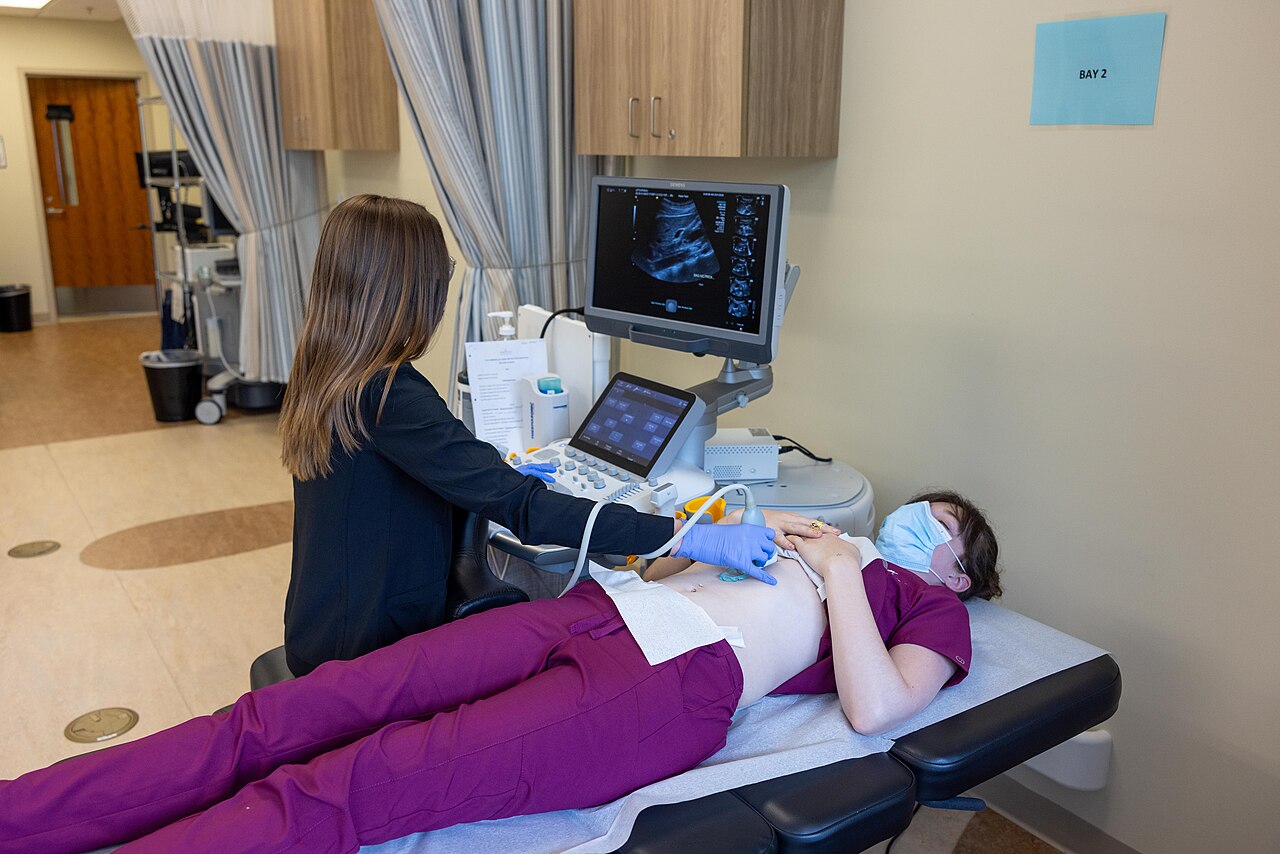
To become an ultrasound technician, also called a diagnostic medical sonographer, you complete a postsecondary sonography program and then earn a professional credential, such as the Registered Diagnostic Medical Sonographer (RDMS) from the American Registry for Diagnostic Medical Sonography (ARDMS). The RDMS requires passing two exams, the Sonography Principles and Instrumentation (SPI) exam and a specialty exam, within five years of each other.
The Bureau of Labor Statistics (BLS) reports that sonographers typically need at least an associate's degree or a postsecondary certificate, that employers may prefer certified candidates, and that some sonographers need a state-issued license. Which program you pick decides how simple the credential step will be, so most of the planning happens before you enroll.
Ultrasound technician programs: three formats
Sonography programs come in three formats, and they suit different starting points.
Certificate programs
The BLS notes that colleges and some hospitals offer certificate programs. Admission requirements differ widely between them, so ask early what background a program expects, such as prior college courses in anatomy, physiology, physics or math, or experience in patient care.
Associate's degrees
Two-year colleges award associate's degrees in diagnostic medical sonography, and BLS lists an associate's degree as a typical entry credential. The program combines classroom work in anatomy, physics and scanning technique with supervised clinical rotations.
Bachelor's degrees
Four-year colleges and universities offer bachelor's degrees in sonography or vascular technology. A sonography bachelor's counts as its own ARDMS pathway.
Whatever the format, check two things first: is the program programmatically accredited, and does it include enough supervised clinical time to qualify you for the ARDMS exams?
Why accreditation decides your path to the exam
Sonography programs are reviewed by the Joint Review Committee on Education in Diagnostic Medical Sonography (JRC-DMS) and accredited through the Commission on Accreditation of Allied Health Education Programs (CAAHEP). Graduation from a CAAHEP-accredited program (or one accredited by CMA/HSO) is ARDMS's "Pathway 2," and it is the cleanest way in. The program's clinical training covers the experience requirement, so you do not document clinical hours separately. If you apply within one year of finishing, you also skip the clinical verification form. Students in programs whose directors use ARDMS's paperless process may apply up to 60 days before graduation.
Graduates of other programs can still qualify, but the paperwork is heavier:
| ARDMS pathway | Education | Clinical experience required |
|---|---|---|
| Pathway 1 | Two-year allied health program in a patient-care field | 12 months full time in ultrasound or vascular work (at least 1,680 hours) |
| Pathway 2 | CAAHEP- or CMA/HSO-accredited sonography, cardiac or vascular program | Covered by the program |
| Pathway 3A | Bachelor's degree in any major | 12 months full time (at least 1,680 hours) |
| Pathway 3B | Bachelor's in sonography or vascular technology | Covered by the program |
For Pathways 1 and 3A, the clinical time must be in a hospital, clinic or private practice. Volunteer or unpaid work, veterinary scanning and non-diagnostic "3D/4D" scans do not count. Full time means 35 hours a week for at least 48 weeks.
The ARDMS exams: SPI first, then a specialty
The SPI exam tests ultrasound physics and instrumentation. Inteleos, the organization that administers ARDMS exams, lists it at about 110 multiple-choice questions over two hours, with a fee of $275. Once you pass it and keep your credential active, you do not retake it.
The RDMS credential then requires at least one specialty exam. Current options include abdomen, breast, and obstetrics and gynecology. Cardiac and vascular sonographers follow the same structure toward the RDCS and RVT credentials. You must pass the SPI and the matching specialty exam within five years of each other, in either order.
An early-entry option lets students sit for the SPI before graduating. It requires a college physics course with "Physics," "Physical Principles" or "Instrumentation" in the title and a grade of C or better, or at least 12 accepted continuing education credits in physics. Passing the SPI early takes one exam off your plate in your final semester.
State licensing: a few states add a step
BLS says only that some sonographers need a state license. New Mexico is one concrete example. Its rules make it unlawful for an unlicensed person to perform medical imaging, and the state Environment Department's Medical Imaging and Radiation Therapy Program licenses diagnostic medical sonographers. Rules differ from state to state, so check the requirements where you plan to work before you choose a program.
Pay and outlook
BLS reports a median annual wage of $96,590 for diagnostic medical sonographers in May 2025, and it projects employment to grow 14 percent from 2025 to 2035. Those figures are national. Pay depends on specialty, setting, shift and region, so expect your own wage to land above or below that midpoint.
The work is physical. BLS notes that sonographers may stand for long periods and lift or turn patients who are ill or disabled, and because hospitals stay open around the clock, shifts can include evenings, weekends or overnights. Weigh that honestly if you are changing careers later in life.
How to choose a sonography program
Ask every program on your list the same set of questions:
- Is it accredited by CAAHEP, and in which concentrations?
- How many clinical hours are included, and at which hospitals or clinics?
- Who arranges clinical placements, and how far will you need to travel?
- What share of recent graduates passed the SPI and specialty exams, and how many found work in the field?
- What are the admission prerequisites, and must they be finished before you apply?
- What does the program cost in total, including books, scrubs, background checks, immunizations and exam fees?
Then compare programs on fit. If you already hold a two-year allied health degree or a bachelor's in another field, ask whether a certificate program would give you an accredited credential faster than starting a new degree. If you are starting fresh, an accredited associate program usually leaves the fewest gaps.
Accreditation does the most to simplify the path. It folds the clinical requirement into your coursework and lets you apply under Pathway 2 without documenting clinical hours separately.
Sources and further reading
- BLS Occupational Outlook Handbook: Diagnostic Medical Sonographers and Cardiovascular Technologists
- Inteleos/ARDMS: Sonography Principles and Instrumentation exam
- ARDMS: SPI and specialty exam prerequisites (PDF)
- JRC-DMS: Joint Review Committee on Education in Diagnostic Medical Sonography
- New Mexico Administrative Code 20.3.20.100, license required (Cornell LII)