Orthopedic Technician Courses: Training Routes and the OTC Certification Exam
What orthopedic technician courses lead to: the OTC exam, its three eligibility routes, the 450-hour program rule, exam fees and six-year recertification.
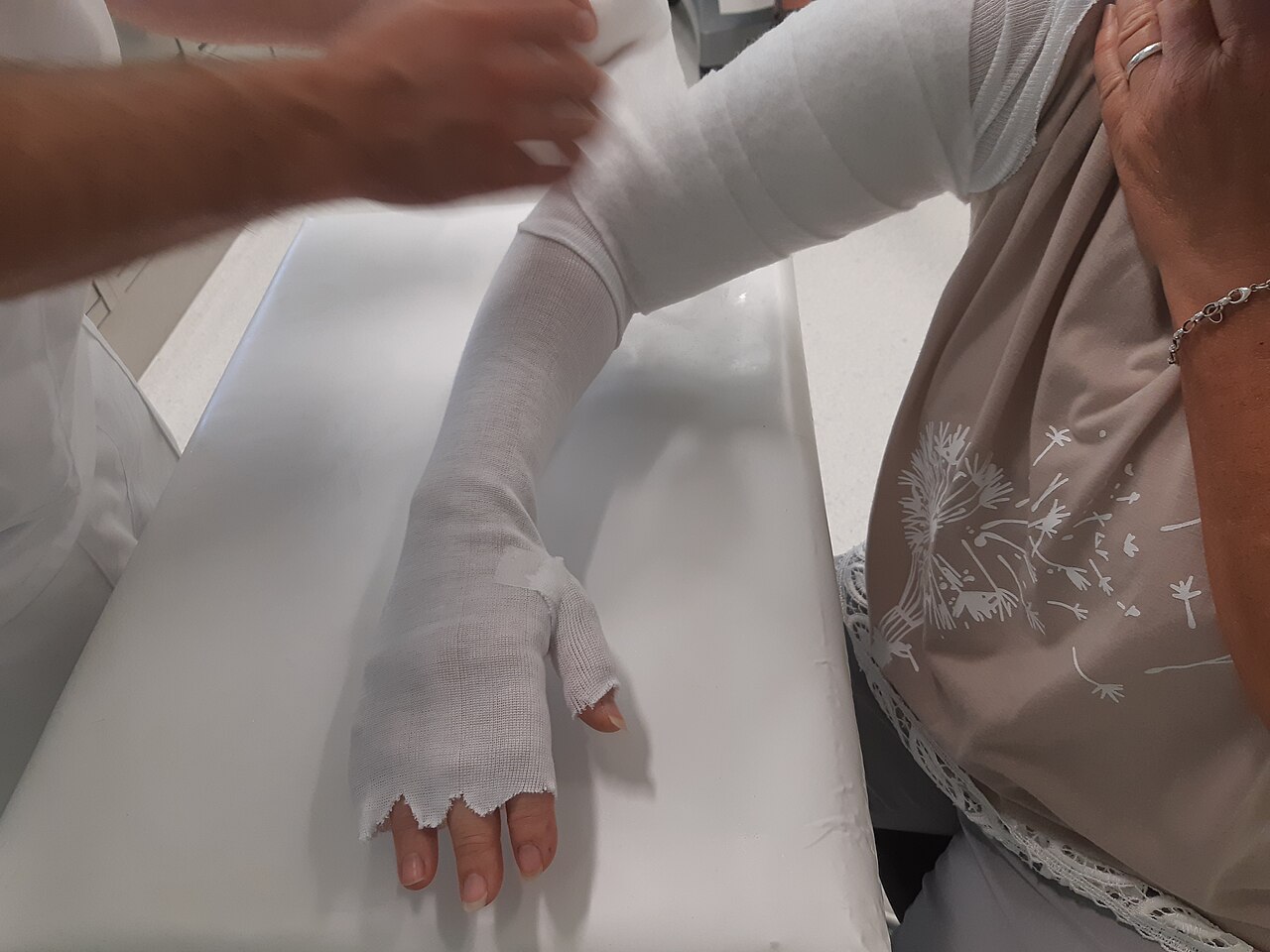
Orthopedic technician courses train you to apply and remove casts and splints, fit braces and assist orthopedic surgeons, and the national credential in the field is the Orthopaedic Technologist Certified (OTC) exam. To qualify for that exam through a training program, the National Board for Certification of Orthopaedic Technologists (NBCOT) requires at least 450 hours of classroom and lab instruction plus at least 200 hours of clinical or externship training.
Keep those hour counts in mind when you see a "short" course on offer. A few days of casting practice can sharpen skills for someone already working in a clinic, but it does not, by itself, open the program route to certification.
What orthopedic technicians learn and do
The job goes by several names: orthopedic technician, ortho tech, orthopaedic technologist. The OTC exam outline is a good map of the work, because NBCOT builds it from a job analysis of people in the field. Its four domains are weighted this way:
- casting, splinting and orthopaedic appliances, 40%;
- patient assessment and management, 30%;
- clinic and hospital surgical procedures, 20%;
- office and clinic management, 10%.
In daily terms, that means choosing cast and splint materials, applying upper and lower extremity casts, cutting and adjusting them, fitting durable medical equipment such as braces and boots, checking skin and circulation, and teaching patients how to care for a cast at home. Techs also take a history, know the standard X-ray views, keep supplies stocked and follow infection control rules. The settings NBCOT requires programs to cover are a hospital orthopaedic floor, the operating room and an orthopaedic physician's office.
One naming trap: the letters NBCOT are also used by the National Board for Certification in Occupational Therapy, a different organization at a different web address. The orthopaedic board is at nbcot.net.
Three routes to the OTC exam
NBCOT accepts applicants through one of three eligibility routes. Each has its own application form.
| Route | Who it is for | Core requirement |
|---|---|---|
| A: supervised work | People trained on the job | At least 24 months of full-time orthopaedic technology work within the 36 months before applying, under direct supervision of a licensed physician specializing in the musculoskeletal system |
| B: training program | Graduates of a qualifying civilian or U.S. military program | At least 450 instruction hours and at least 200 clinical or externship hours; application within 12 months of finishing |
| C: athletic trainers | Certified or state-licensed athletic trainers | At least 6 months full-time, or 1,040 hours, of orthopaedic technology work within the past 12 months, under physician supervision |
Route B has more conditions than the hour counts. The school must be accredited by an agency recognized by the U.S. Department of Education or the Council for Higher Education Accreditation. The program needs at least one instructor who holds the OTC, a physician advisor who signs a notarized verification, and clinical time in all three settings listed above. It must also issue a certificate of completion; NBCOT does not accept a university transcript in its place.
Applicants who trained outside the United States need at least two years of employment as an orthopaedic technologist in a U.S. hospital, clinic or private practice before they apply.
What short courses can and cannot do
Short orthopedic technician courses come in several forms: weekend casting and splinting workshops, online modules, and introductory classes at community colleges. They can be worth taking if you already work as a medical assistant, nurse or athletic trainer and want hands-on practice. Ask for the total instruction and clinical hours in writing and compare them with the 450 and 200 figures.
You may also see a second credential, the Registered Orthopedic Technologist (ROT) from the American Society of Orthopedic Professionals. O*NET lists it as requiring an online exam and a practical component. Look at what local employers ask for before deciding which credential to pursue.
National pay data for this job is thin. The Bureau of Labor Statistics does not publish a separate Occupational Outlook Handbook profile for orthopedic technicians, and O*NET files the title under medical appliance technicians, a group that also includes people who build and repair braces and prosthetics. Treat salary figures quoted for this job with caution.
The OTC exam: format, fees and dates
The OTC exam has 165 multiple-choice questions with four answer choices each. Fifteen are unscored research questions, so your result rests on 150 items. Official results reach NBCOT up to five business days after you test.
The exam runs five times a year, during the whole months of February, April, June, September and November. Applications are due by noon Eastern on the 20th of the month two months earlier; for a February test, that is December 20. NBCOT lists a $100 application fee and a $450 exam fee, plus a $100 late fee for applications that miss the deadline. Active-duty military are exempt from the application fee.
Testing takes place at local sites run by ISO-Quality Testing. Once NBCOT approves you, the testing company emails you and you book your own appointment. You may take the exam three consecutive times; after a third unsuccessful attempt, you wait six calendar months before reapplying.
Keeping the credential
OTC certification runs on a six-year cycle. You renew either by earning continuing education units during the cycle or by retaking the exam at the end of it.
Next steps from course to credential
- Decide which route fits you. If you already work under an orthopedic surgeon, ask whether your hours could count toward Route A.
- If you need a program, ask the school to show how it meets each Route B condition: accreditation, 450 instruction hours, 200 clinical hours in all three settings, an OTC-certified instructor and a physician advisor.
- Download the current application and eligibility policy from nbcot.net, since NBCOT updates them for each exam year.
- Pick an exam month and work back to the deadline two months earlier.
- Plan for recertification from the start by keeping records of continuing education.
The hour requirements are the part that decides whether a course counts. Check them first, and the rest of the path follows a fixed order.