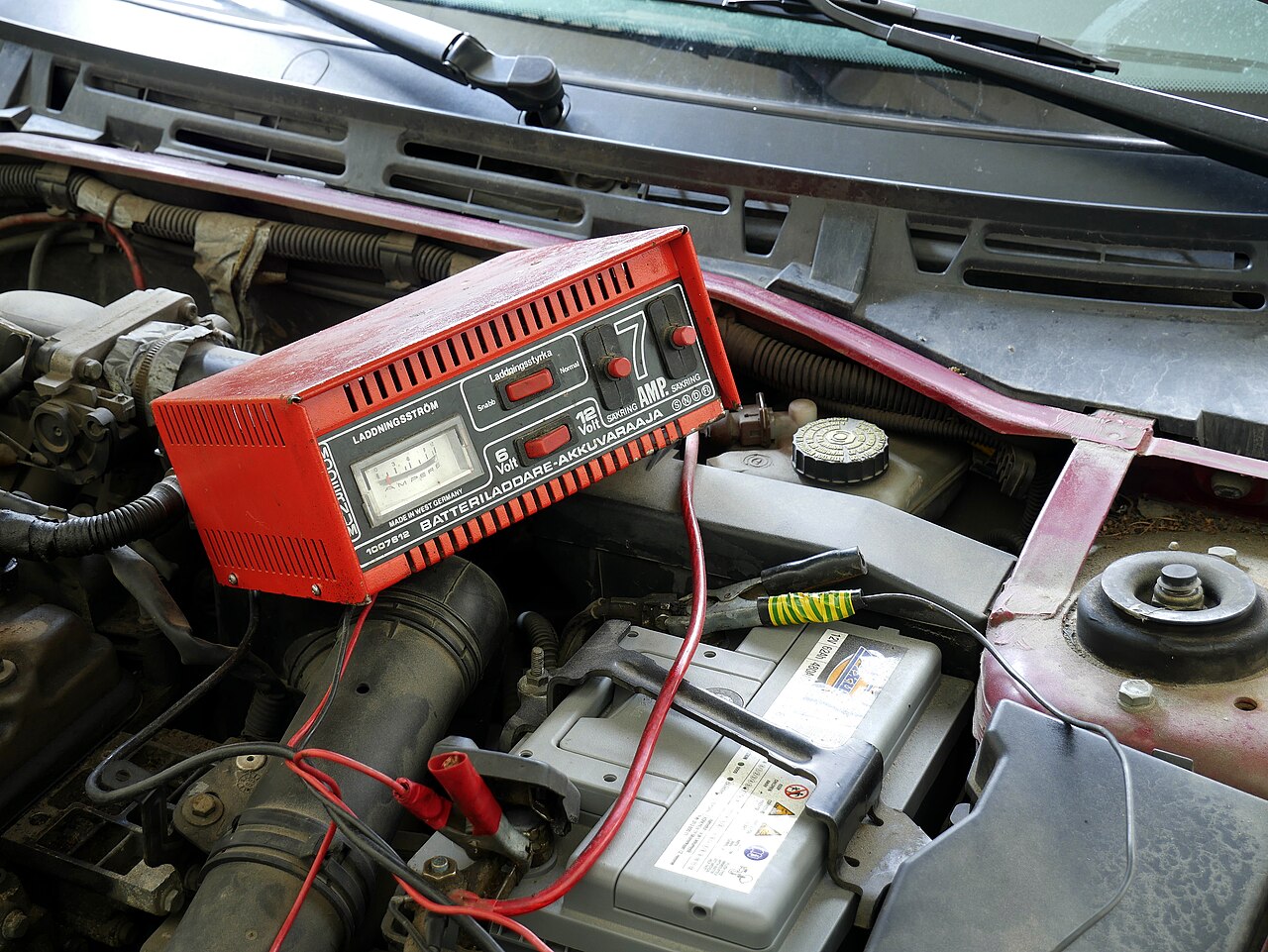
Car AC Blowing Warm Air: Causes, Recharge Kits and Repair Options
Why a car AC blows warm air, what each symptom points to, when a recharge kit helps, and how to get an AC repair diagnosed and quoted by a certified shop.
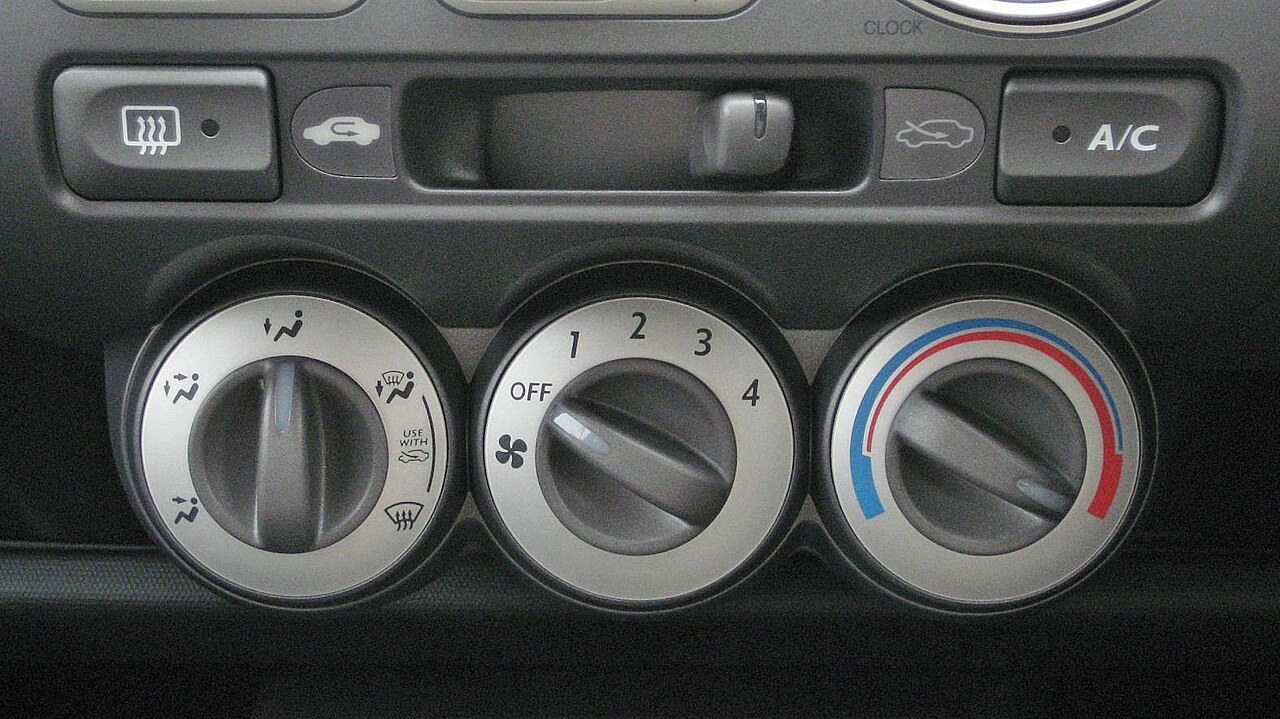
If your car AC is blowing warm air at stoplights but cools again once you are moving, the condenser or its cooling fan is the first suspect. If it never cools at all, look at the fuse, the compressor and the refrigerant charge. Any repair that opens the refrigerant loop for pay has to be done by a technician certified under Section 609 of the Clean Air Act.
A few of these causes take five minutes to rule out in your driveway. Others need gauges, a leak test and a certified shop.
Why a car AC blows warm air: how the system cools
A car AC system moves heat out of the cabin rather than making cold air. A compressor, driven by the engine belt or, in many hybrids and electric vehicles, by an electric motor, pressurizes refrigerant and pumps it through a closed loop. The refrigerant gives off heat at the condenser, a radiator-like part at the front of the car, and picks up heat from cabin air at the evaporator behind the dashboard. A blower then pushes the cooled air out of the vents.
Because the loop is sealed, a fault at any point along it can stop the cooling.
The usual causes
A refrigerant leak
The system does not use up refrigerant in normal driving. A low level means some escaped through a seal, hose, fitting, the condenser or the evaporator. A slow leak shows up as cooling that fades over weeks rather than failing in one day.
A compressor that won't engage
Many compressors use an electromagnetic clutch that engages when you press the AC button. A failed clutch, fuse, relay, pressure switch or wire keeps the compressor from running. Very low refrigerant can also stop a pressure switch from letting it engage.
Condenser or fan trouble
The condenser needs strong airflow to shed heat. Leaves and bugs packed into its fins, damage from road debris or an electric fan that never turns on all cut cooling, and the effect is worst when the car is standing still.
Blend door faults
A small door inside the dashboard mixes heated and cooled air to reach the temperature you set. When the motor that moves it, the blend door actuator, fails, hot air can reach the vents while the AC runs normally.
A clogged cabin filter
A dirty cabin air filter does not turn cold air warm, but it can cut airflow so much that the cabin never cools on a hot day.
Symptoms, likely causes and who fixes them
| What you notice | Likely cause | Check it yourself or take it in |
|---|---|---|
| Cold on the highway, warm at idle | Blocked condenser or a cooling fan that isn't running | Look through the grille yourself; fan repair goes to a shop |
| Cooling weaker every week | Slow refrigerant leak | Shop: leak test and repair |
| No cooling at all, compressor never clicks on | Fuse, relay, clutch, pressure switch or very low refrigerant | Check the fuse yourself; the rest goes to a shop |
| Air stays one temperature at any setting | Blend door actuator or climate control fault | Shop |
| Air is cool but barely flows | Clogged cabin air filter or blower problem | Filter yourself; blower to a shop |
Checks that don't open the refrigerant system
These checks are safe for an owner and help a shop narrow the problem faster:
- Rule out the controls. Confirm the AC is on and the temperature is set all the way to cold. On automatic systems, change the setting and see whether the air changes at all.
- Watch the compressor engage. With the car parked and idling, have a helper switch on the AC while you keep your hands clear of belts and fans. On cars with a compressor clutch, the center of the pulley should start to spin. Some newer compressors have no clutch, so this check does not apply to them.
- Look through the grille. A condenser matted with debris, or an electric fan that never starts while the AC runs, would explain warm air at idle.
- Pull the cabin air filter. On many cars it sits behind the glove box.
- Check the AC fuse using the diagram in the owner's manual.
- Write down when it happens: at idle, on the highway, after ten minutes, only on the hottest days.
AC recharge kits: when they help and when they don't
The U.S. Environmental Protection Agency (EPA) says topping off or recharging should improve cooling, but neither permanently fixes a leak. Nobody can tell at the start how much refrigerant is left, so a top-off can leave the system undercharged or overcharged, and both hurt performance. EPA says that repairing or replacing the leaking parts, done properly, lasts longer.
Federal rules allow stores to sell small cans of R-134a, 2 pounds or less, for car air conditioners, but cans made or imported since January 1, 2018, must have a self-sealing valve. California adds its own small-can requirements. A few more rules apply to anyone working on the system:
- Under the Clean Air Act, it is illegal to intentionally release refrigerant into the air while servicing or disposing of a vehicle AC system.
- Anyone paid to service a vehicle AC system must be certified under Section 609 and use approved recovery equipment.
- Many vehicles built in the past few decades use R-134a, and many newer models use R-1234yf. Each refrigerant has its own service fittings so that different refrigerants are not mixed, and EPA rules do not allow an adapter to be used to convert a fitting. The label under the hood or the owner's manual tells you which one your car uses.
At best, a kit buys time on a slow leak. It does nothing when the compressor never engages, because adding refrigerant will not fix a fuse or a clutch.
Car AC repair: what drives the cost
Price depends on the failed part and on how much of the car has to come apart to reach it. A fuse, relay or cabin filter sits at the low end. A leak repair on an accessible hose or the condenser costs more, and it includes recovering, evacuating and recharging the system. A new compressor costs more again. An evaporator or blend door actuator buried behind the dashboard can mean hours of labor even when the part itself is modest. Refrigerant cost also differs by type, so ask for it as a separate line.
Next steps when the air is still warm
- Do the owner checks above and note what you found.
- Choose a shop whose technicians are certified under EPA Section 609.
- Ask how they will find the cause: pressure readings, a dye or electronic leak test, electrical checks.
- Get a written estimate that names the failed part and says whether the leak is being fixed or the system is only being recharged.
- Ask about the warranty on parts and labor.
A recharge on its own only buys time; the repair that lasts is the one that finds and fixes the failed part.
Sources and further reading
- Regulatory Requirements for MVAC System Servicing — U.S. EPA
- Options for Recharging Your Air Conditioner — U.S. EPA
- MVAC Refrigerants: Fitting Sizes and Label Colors — U.S. EPA
- 40 CFR 82.154: Prohibitions, Including Small Cans of Refrigerant — eCFR
- Small Containers of Automotive Refrigerant: Consumer Requirements — California Air Resources Board