Check Engine Light On: What It Means and What to Do First
What a steady or flashing check engine light means, which causes you can rule out yourself, how codes are read and how warranties and inspections come in.
A check engine light that stays on means your car's onboard diagnostic system, OBD II, has detected a fault in the engine or emissions controls; the U.S. Environmental Protection Agency (EPA) says OBD is built into all 1996 and newer light-duty cars and trucks. A flashing light is more urgent: the California Air Resources Board says it signals a malfunction that could be damaging the catalytic converter, so ease off and get the car serviced as soon as possible.
The light by itself does not name the problem. It tells you a code has been stored, and reading that code is the first real step toward a repair.
What the check engine light means
The light is officially called the malfunction indicator lamp, or MIL. It may read "Check Engine," "Service Engine Soon" or show an engine outline. The OBD II computer watches sensors and components that affect emissions, and when one reads outside its normal range, it turns the light on and saves a diagnostic trouble code for a technician.
You should see the light briefly every time you switch the ignition on, as a bulb check. It normally stays lit for a few seconds and then goes out. If it never comes on at all at startup, the system itself needs checking.
What sets the light off ranges widely. EPA gives a malfunctioning oxygen sensor, a loose gas cap and incomplete combustion as examples, and its point about the sensor is worth remembering: a relatively inexpensive repair caught early can save the cost of replacing the catalytic converter later. Ram's owner's manual notes that a loose gas cap or poor-quality fuel can turn it on, and that the car usually drives normally and does not need towing.
Steady, flashing or back off again
How the light behaves tells you how fast to act:
| What the light does | What it usually means | What to do |
|---|---|---|
| Comes on for a few seconds at startup, then goes out | Normal bulb check | Nothing |
| Stays on steadily, car drives normally | A fault that affects emissions or engine control | Check the fuel cap, then have the code read soon |
| Flashes or blinks | A misfire or other fault that can overheat and damage the catalytic converter | Reduce speed, avoid hard acceleration and get service right away |
| Comes on, then goes out after several trips | The fault stopped, for example a cap that was tightened | The code may still be stored; mention it at the next service |
A flashing light deserves real caution. Ram's manual says it signals problems that could cause a sudden loss of power or severe catalytic converter damage, and that immediate service is required. It also warns that an overheated converter can start a fire if you drive slowly or park over dry grass or other flammable material. Oregon's Department of Environmental Quality goes further and discourages driving at all until a flashing-light fault is repaired.
Other warnings, such as oil pressure or engine temperature, are separate lights with their own instructions in the owner's manual. Read those rather than treating every light on the dash the same way.
Two things to check yourself
Start with the fuel cap. Oregon's DEQ says a broken gas cap, or one not completely tightened, can cause a check engine light, and that the light may turn off by itself after several trips once the fault clears. Tighten it until it clicks, and look at the seal for cracks.
Then think about what changed. A light that came on right after refueling points toward the cap or the fuel. One that came with rough idling, shaking or a loss of power points toward a misfire, and that is a reason to drive gently and get it looked at the same day.
Do not keep driving for weeks with a steady light because the car feels fine. Ram's manual warns that long-term driving with the light on can damage the control system and hurt fuel economy and drivability. A second fault can also hide behind the first, because the light is already on.
How the code gets read
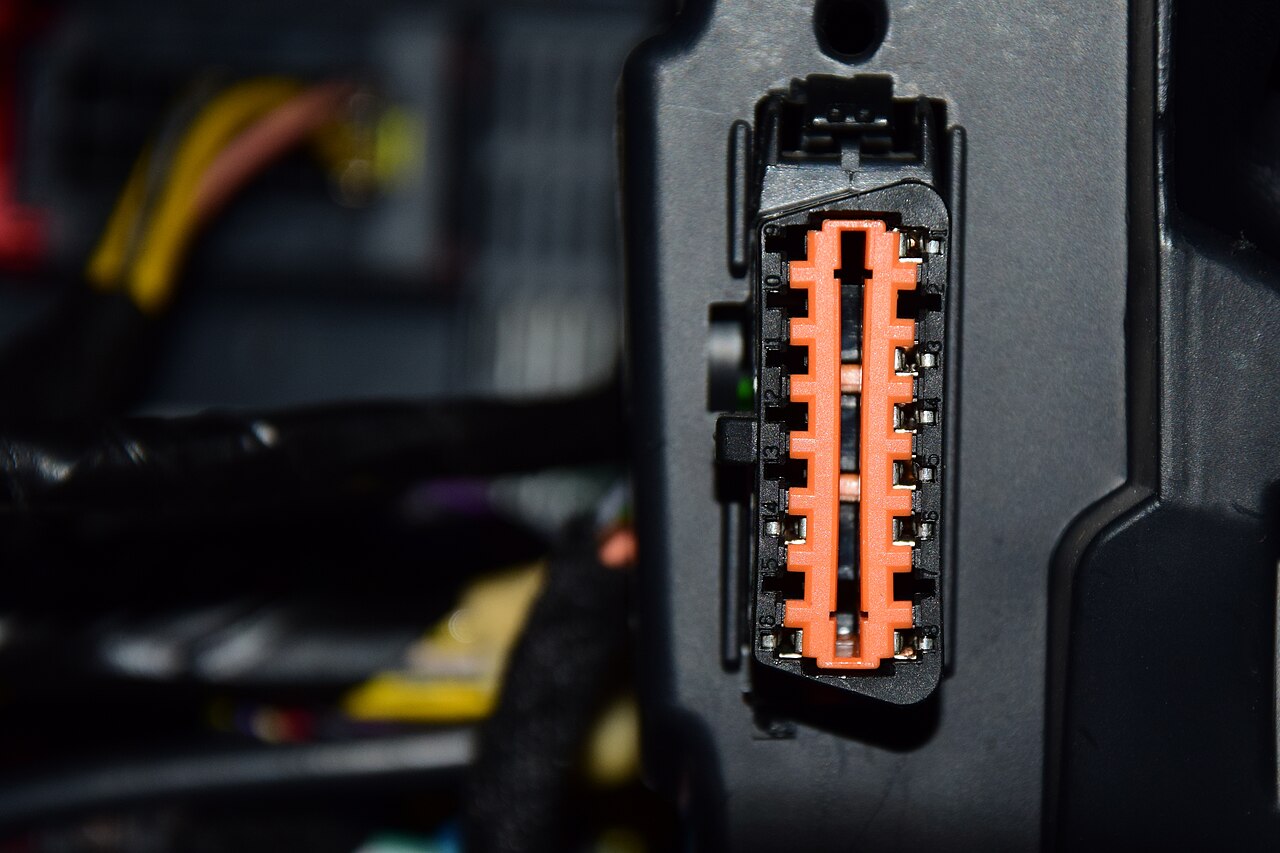
OBD information has been standardized since the 1996 model year, so a shop's scan tool can read the stored codes through the diagnostic connector inside the cabin. EPA notes that technicians routinely consult the OBD system before attempting a repair. A code points to a system or a circuit, not always to one specific part, so a careful technician treats it as a starting point and then tests the parts it implicates before replacing anything.
Clearing the code with a scan tool turns the light off but does not fix anything. If the fault is still there, the light comes back.
Inspections, readiness monitors and warranties
In states with emissions testing, a lit check engine light usually means an automatic fail. California's Smog Check rules require the component causing the light to be repaired before the car can pass. Oregon tests 1996 and newer gasoline vehicles up to 8,500 pounds through the OBD port.
Clearing codes or disconnecting the battery causes a second problem: the self-tests, called readiness monitors, reset. CARB says incomplete monitors can also cause a failed inspection and are usually fixed by driving normally for about a week. Do not schedule an emissions test the morning after a repair.
The repair itself may be covered. Federal rules give light-duty vehicles an emission defect warranty of two years or 24,000 miles, and specified major components, including catalytic converters and the emission control module, are covered for eight years or 80,000 miles. California has its own, longer terms for some parts. Check your warranty booklet, and look up your vehicle identification number (VIN) on NHTSA's recall page, since an open recall may cover the fault.
How to choose a shop and approve the repair
- Write down when the light came on, whether it was steady or flashing and what the car was doing.
- Check the warranty booklet and the NHTSA recall lookup before paying for an emissions-related repair; if the car is under warranty, start with a dealer for that brand.
- Ask the shop for the stored code or codes in writing and what tests they will run to confirm the cause.
- Get a written estimate that names the failed part and separates diagnosis, parts and labor.
- Ask whether the repair needs a drive cycle before the readiness monitors are complete, if you have an inspection coming up.
A steady light is a reason to check the fuel cap and get the code read soon; a flashing one is a reason to slow down and get service right away. Either way, the stored code, confirmed by testing, is what tells you whether the fix is a tightened cap or a real repair.
Sources and further reading
- On-Board Diagnostic II (OBD II) Systems Fact Sheet — California Air Resources Board
- OBD Testing — Oregon Department of Environmental Quality
- 40 CFR 85.2103: Emission warranty periods — Legal Information Institute
- Engine Check/Malfunction Indicator Light — Ram Owner's Manual (Mopar)
- OBD: Frequently Asked Questions (EPA-420-F-02-014) — U.S. EPA, archived copy