Car Battery Replacement: Warning Signs, Lifespan and What Sets the Cost
Signs a car battery is failing, how long batteries typically last, why heat wears them out, and which parts of a battery replacement change the price.
Car battery replacement is usually due when the engine starts cranking more slowly, the battery is several years old or it fails a load test at a shop. A car that needs a jump more than once in a short stretch points the same way.
A few checks tell you whether the battery is the real problem or whether something is draining or failing to recharge it. That matters, because a new battery will not fix a bad alternator.
Signs a car battery needs replacement
Slow cranking is the classic sign. The starter turns the engine over with a labored, dragging sound before it catches, and it gets worse on cold mornings. Other signs:
- The car starts fine after a drive but struggles after sitting for a day or two.
- Dash lights flicker or dim when you turn the key, or the radio and clock reset.
- You have needed a jump start more than once in a few weeks.
- The battery case is swollen or cracked, or the terminals are crusted with white or bluish corrosion.
- On cars with automatic engine stop-start, the engine stops shutting off at red lights. Owner's manuals for these cars commonly list a low battery charge among the reasons the feature may not operate.
Age counts too. Battery makers such as OPTIMA put typical life at three to five years, and less in hot climates, so a battery in that range that shows any of these signs is a likely suspect. Your service records or the old receipt tell you when it went in.
Why batteries wear out
Heat does the slow damage. OPTIMA notes that the damage behind a winter no-start was probably done during the hottest summer months; the cold simply makes a weak battery work harder. The National Highway Traffic Safety Administration (NHTSA) makes the same point from the other side: when the temperature drops, so does battery power, and gasoline and diesel engines need more of it to start in the cold.
Driving habits matter as well. Short trips do not give the alternator time to replace the energy used to start the engine. A car that sits for weeks keeps drawing small amounts of power for its clock, alarm and keyless entry, and modern cars draw more of it than older ones. And when a battery is run completely flat, the alternator alone will not bring it back; OPTIMA says charging systems are not designed to recover a deeply discharged battery.
Battery or charging system?
A dead battery and a failing charging system look alike from the driver's seat, so find out which one you have before buying a part. The battery warning light, usually a small battery symbol, is mostly about charging. Owner's manuals typically say it signals a fault in the alternator or the electrical charging system, and that a car showing it while driving should be inspected.
A shop or parts store tester checks three things: the battery's state of charge, its ability to deliver current under load, and the alternator's output with the engine running. NHTSA's winter advice is to have a mechanic check the battery's voltage, amperage and reserve capacity and to have the charging system and belts inspected. If the battery passes and keeps going flat, ask about a parasitic drain test, which looks for something that stays on after the car is off.
What drives the cost of a battery replacement
The price depends less on the battery brand than on what your car requires and how much work it takes to install. No single national price applies, and these are the line items that move a quote:
| What changes the price | Why it matters |
|---|---|
| Battery type | Some cars with stop-start use an absorbent glass mat (AGM) battery instead of a conventional flooded one. Automakers that use AGM batteries for stop-start typically specify an AGM replacement, or one with equivalent specifications. |
| Size and rating | The battery has to match the group size, terminal layout and cold-cranking rating listed in the owner's manual. |
| Location and labor | Some batteries sit in plain view under the hood. Others are under a seat, in the trunk or behind other parts, which adds labor. |
| Setup after installation | Some cars need the new battery registered with a scan tool or a sensor recalibrated, and stop-start may stay off for a while afterward. Items such as power windows and the clock may need resetting. |
| Core deposit | Several states require a refundable deposit when you buy a battery without returning the old one. In Maine it is $10, refunded if you bring a used battery back within 30 days. |
| Testing and disposal | Ask whether testing the old battery and recycling it are included. |
Hybrids and electric vehicles add one more wrinkle. Besides the large high-voltage pack, they carry a 12-volt battery for lights, locks and electronics. In some models it is a lithium unit tied to the high-voltage battery, so replacing it is a dealer or specialist job rather than a quick swap.
Jump starts and safety
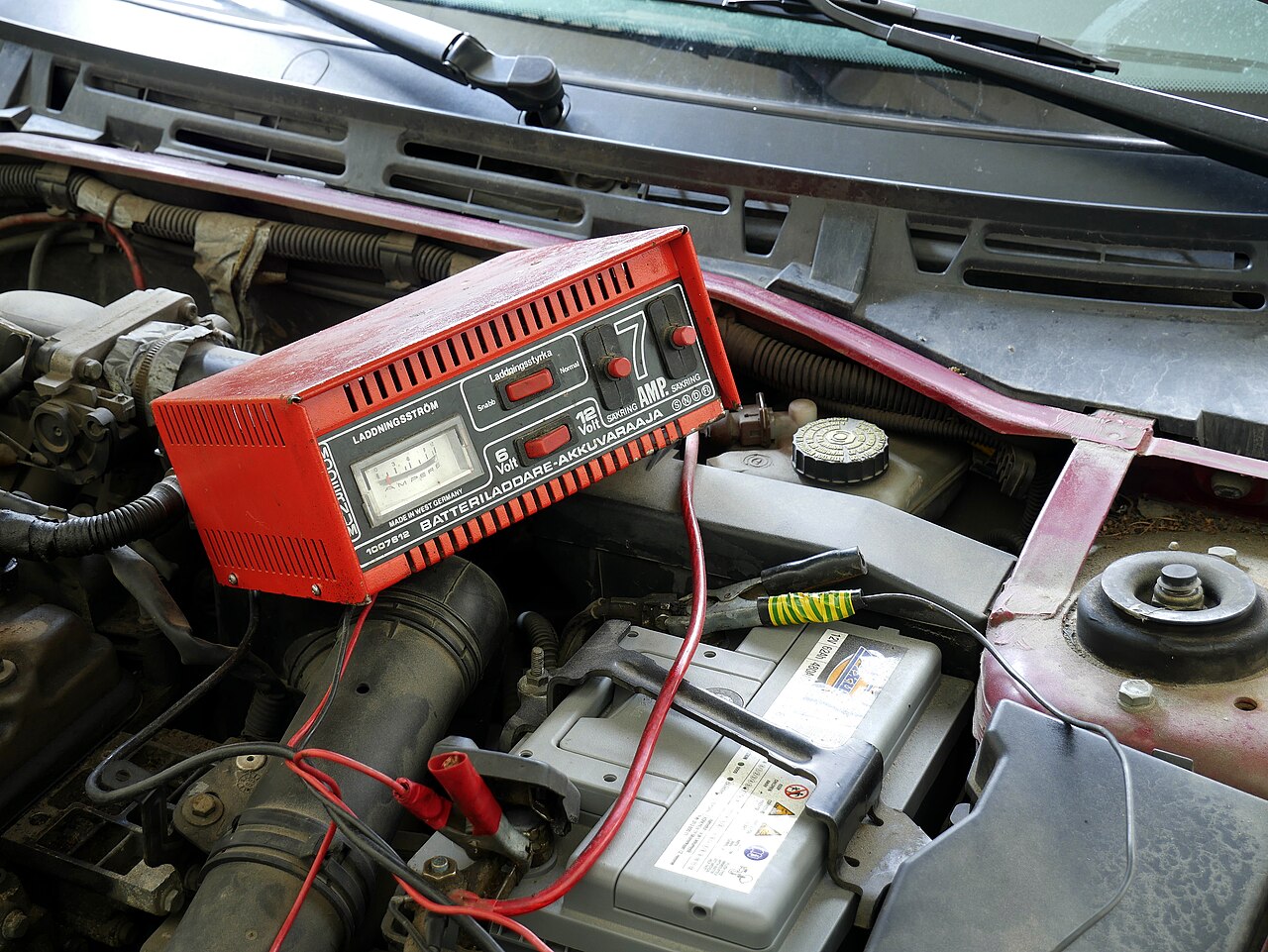
A jump can get you home, but it does not mean the battery is healthy. After a jump, keep the engine running long enough to put some charge back before shutting it off, or the car may not restart. A charger or a test afterward tells you whether the battery can still hold a charge.
Handle a battery with care. Battery cells always contain hydrogen, which is highly combustible, so keep sparks, flames and cigarettes away. The sulfuric acid inside is corrosive: wear eye protection, and if acid reaches your eyes, flush them with clean water for at least 15 minutes and get medical help. Never try to jump-start a frozen battery.
Old lead-acid batteries do not go in household trash or the recycling bin. The U.S. Environmental Protection Agency (EPA) says to return them to a battery retailer or a local household hazardous waste collection program.
What to ask for in a battery quote
- Have the battery and the charging system tested, not just the battery, especially if the battery warning light has come on.
- Look up the battery type, group size and cold-cranking rating in the owner's manual or on the label of the current battery.
- If your car has stop-start, confirm it uses an AGM or another specified type, and ask whether the new battery must be registered or calibrated.
- Ask for a quote that lists the battery, labor, any setup step, the core deposit and disposal separately.
- Check the warranty terms: how long full replacement lasts and whether the shop that installs it handles claims.
- Bring the old battery back, or keep the receipt so you can collect the deposit later.
A battery that cranks slowly, is several years old and fails a load test is due for replacement. If it passes and the car still goes dead, the alternator or a drain is the more likely cause, and that is where the repair money belongs.