Home Generator Size: How Many Watts Your House Really Needs
Home generator size made simple: add running watts, add the largest starting surge, and see what a fridge, sump pump, furnace fan or heat pump needs.
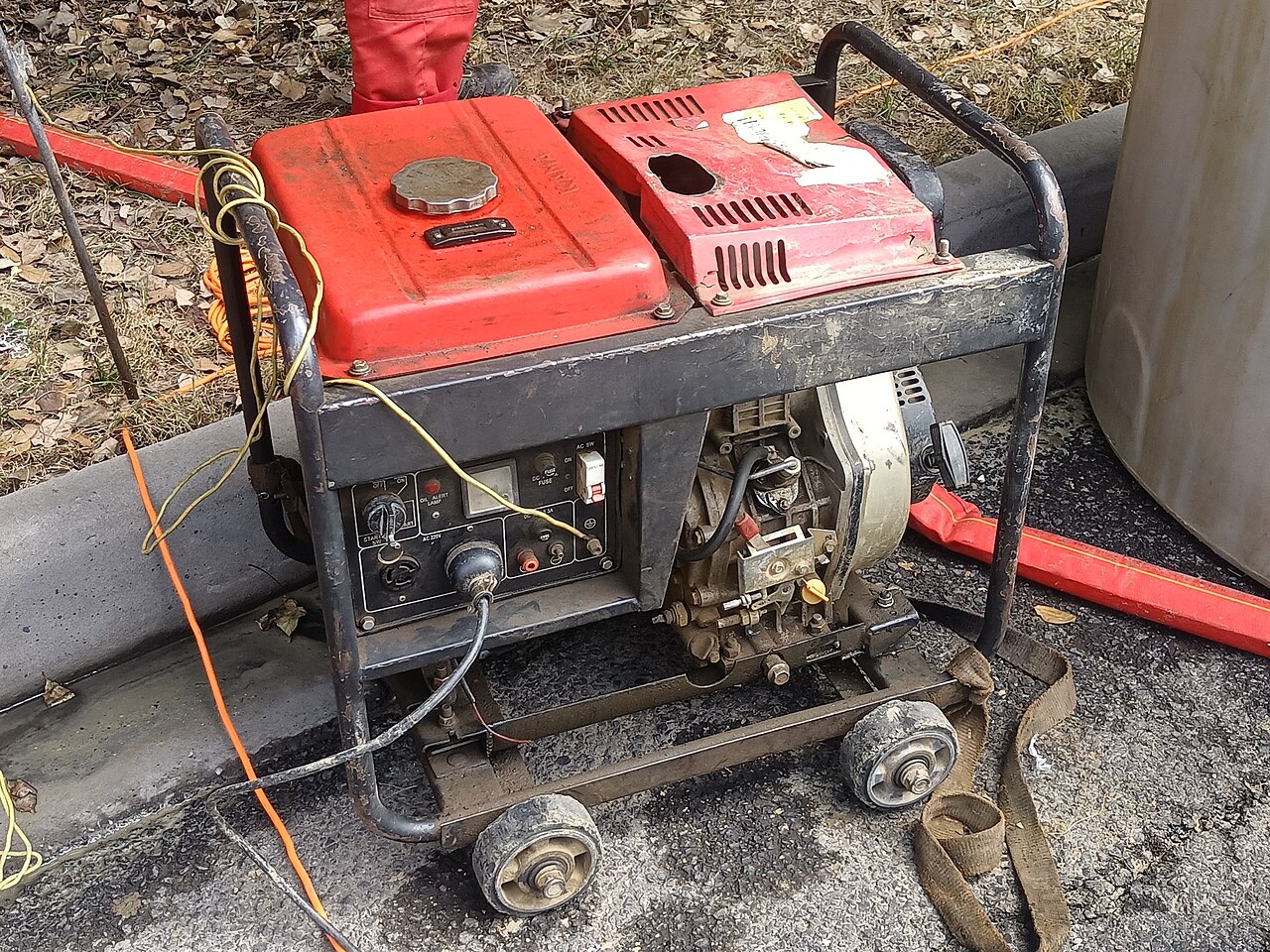
To size a home generator, add up the running watts of everything you want on at the same time, then add the extra starting watts of the single largest motor. With typical figures from a public utility worksheet, a refrigerator, furnace blower, half-horsepower sump pump and a few lights come to about 2,700 running watts and close to 4,900 watts for a moment when the biggest motor starts.
That one calculation decides whether a portable unit and extension cords will do, or whether you need a transfer switch or a permanently installed standby generator. Treat the figures in this article as typical; the nameplate on your own appliances is the final word.
Home generator size: running watts and starting watts
Every generator lists two ratings. Running (or rated) watts are what it can supply hour after hour. Starting (or surge) watts are the higher output it can hold for a few seconds while a motor gets up to speed.
Appliances with motors or compressors draw far more power for those first seconds than they do once running. A public utility's sizing worksheet lists a refrigerator that runs on 700 watts needing another 2,200 watts to start, and a furnace blower needing double its running power. Lights, phone chargers and TVs have no surge to speak of.
The method used by utilities and manufacturers alike has three steps:
- List what you want running at the same time and add their running watts.
- Find the one item with the highest extra starting watts.
- Add that number to the running total. The result is the surge your generator must handle.
You only add one starting surge because motors rarely start at the exact same second. If two large motors could start together, such as a well pump and a sump pump during a storm, add both.
Typical wattage for common household loads
These figures come from the generator sizing worksheet published by the Eugene Water & Electric Board, a public utility in Oregon. Your model may differ, so check the label or manual.
| Appliance | Running watts | Extra starting watts |
|---|---|---|
| Refrigerator/freezer | 700 | 2,200 |
| Furnace fan blower, 1/3 HP | 700 | 1,400 |
| Sump pump, 1/2 HP | 1,050 | 2,200 |
| Well pump, 1/3 HP | 1,000 | 2,000 |
| Window air conditioner, 12,000 BTU | 3,250 | 3,950 |
| Microwave, 1,000 W | 1,000 | none |
| Electric space heater | 1,500 | none |
| Electric water heater | 4,500 | none |
| LED bulb, 15 W | 15 | none |
If an appliance shows only volts and amps, multiply them: 120 volts times 5 amps is 600 watts.
A worked example for a typical house
Say the goal is to keep food cold, run the gas furnace, keep the basement dry and have some light:
- refrigerator, 700 W;
- furnace blower, 700 W;
- sump pump, 1,050 W;
- ten LED bulbs, 150 W;
- phone chargers and a laptop, about 80 W.
That adds up to 2,680 running watts. The largest extra starting load is 2,200 watts (the refrigerator and the sump pump tie), so the generator must handle about 4,880 watts at the moment one of them kicks on.
Now add a microwave for meals, and running watts rise to 3,680. A space heater would push it to more than 5,000. Pick a unit whose running rating sits above your total rather than right at it, and stagger big loads: microwave off before the space heater goes on.
Heat pumps, central air and electric heat
Whole-house electric systems change the math. DTE Energy's appliance worksheet lists an electric heat pump at about 6,000 running watts with a starting factor of three, and a 3-ton central air conditioner in the same range. An electric water heater runs at 4,500 watts or more, and an electric range can draw several thousand watts with every burner on.
A heat pump home that wants to keep heating through an outage usually needs a large standby generator, sized by an electrician from the unit's actual nameplate and any soft-start device that reduces its surge. If that is out of reach, the realistic goal shifts to keeping the furnace blower or a few rooms warm, protecting pipes and keeping the refrigerator running.
Connecting a generator to the house safely
A portable generator powers appliances through heavy-duty extension cords made for outdoor use. The CPSC says each cord's wattage rating should exceed the total wattage of what is plugged into it, and the cord should be long enough to keep the generator well away from the house.
Never plug a generator into a wall outlet to feed the house wiring. The CPSC calls this "backfeeding" and warns that it can electrocute utility workers and neighbors served by the same transformer, while also bypassing your home's built-in circuit protection. To run hardwired equipment such as a furnace or well pump, have a licensed electrician install a transfer switch or approved interlock, which keeps the generator and the utility line from ever being connected at once.
Carbon monoxide: the danger that grows with size
A bigger engine makes more exhaust. The CPSC estimates that about 750 people died from carbon monoxide poisoning associated with generators between 2012 and 2022. Its rules for portable units are firm:
- run the generator outdoors only, at least 20 feet from the house, with the exhaust pointed away from buildings;
- never run it in a garage, basement, crawlspace or shed, even with doors open;
- turn it off and let it cool before refueling;
- keep battery-powered or battery-backup CO alarms inside the home.
Some newer portable generators shut themselves off when CO builds up around them. A CPSC staff study found that models meeting the voluntary standard UL 2201, which also requires lower CO emissions, would have prevented nearly all of the deaths it simulated, so the feature is worth looking for.
How to choose between portable and standby
Start with your list and your total. A portable generator in the range your worked example shows can cover a refrigerator, a sump pump, a gas furnace blower and lights, as long as you can wheel it out, fuel it and run cords safely in bad weather. Plan where fuel will live: the CPSC says never to store gasoline, propane or kerosene in the home, only outside living areas in labeled safety containers. Dual-fuel models that also burn propane are one way to avoid storing much gasoline.
A standby generator sits on a pad outside, runs on natural gas or propane, and starts on its own through an automatic transfer switch. It suits homes with a heat pump, a well, medical equipment that needs power, or an owner who cannot handle a portable unit in snow. It is installed by professionals under local permit rules, and its price depends mostly on its size, the transfer switch, and how far the gas line and wiring have to run, so get written quotes that list each part.
Whichever you choose, size it from your own nameplates, add one starting surge, leave headroom, and connect it through cords or a transfer switch, never a wall outlet. A generator matched to the loads that matter most will carry a house through an outage more reliably than a bigger one bought by guesswork.