Walk-In Showers and Tubs for Seniors: Safety Features and What Drives the Cost
Walk-in showers vs. walk-in tubs for seniors: the safety features that matter, what drives the cost, and what Medicare and the IRS say about paying for them.
For most older adults, a walk-in shower with a low threshold, a seat, grab bars and a handheld showerhead removes the biggest bathroom hazard: stepping over a tub wall onto a wet floor. A walk-in tub makes sense mainly for people who want to soak and are comfortable sitting inside while it fills and drains. Falls in tubs and showers sent adults 65 and older to emergency rooms about 100,580 times a year in 2017–2021, by CPSC estimates.
Either option can be done well or badly, so judge it by its safety features and by who will use the bathroom.
Walk-in shower or walk-in tub: how they differ
A walk-in shower replaces a tub, or an old shower stall, with a stall you enter with little or no step. It can be curbless, with the floor sloping gently to the drain, or have a low curb. A fold-down or built-in seat and a handheld shower on a slide bar let you wash sitting down.
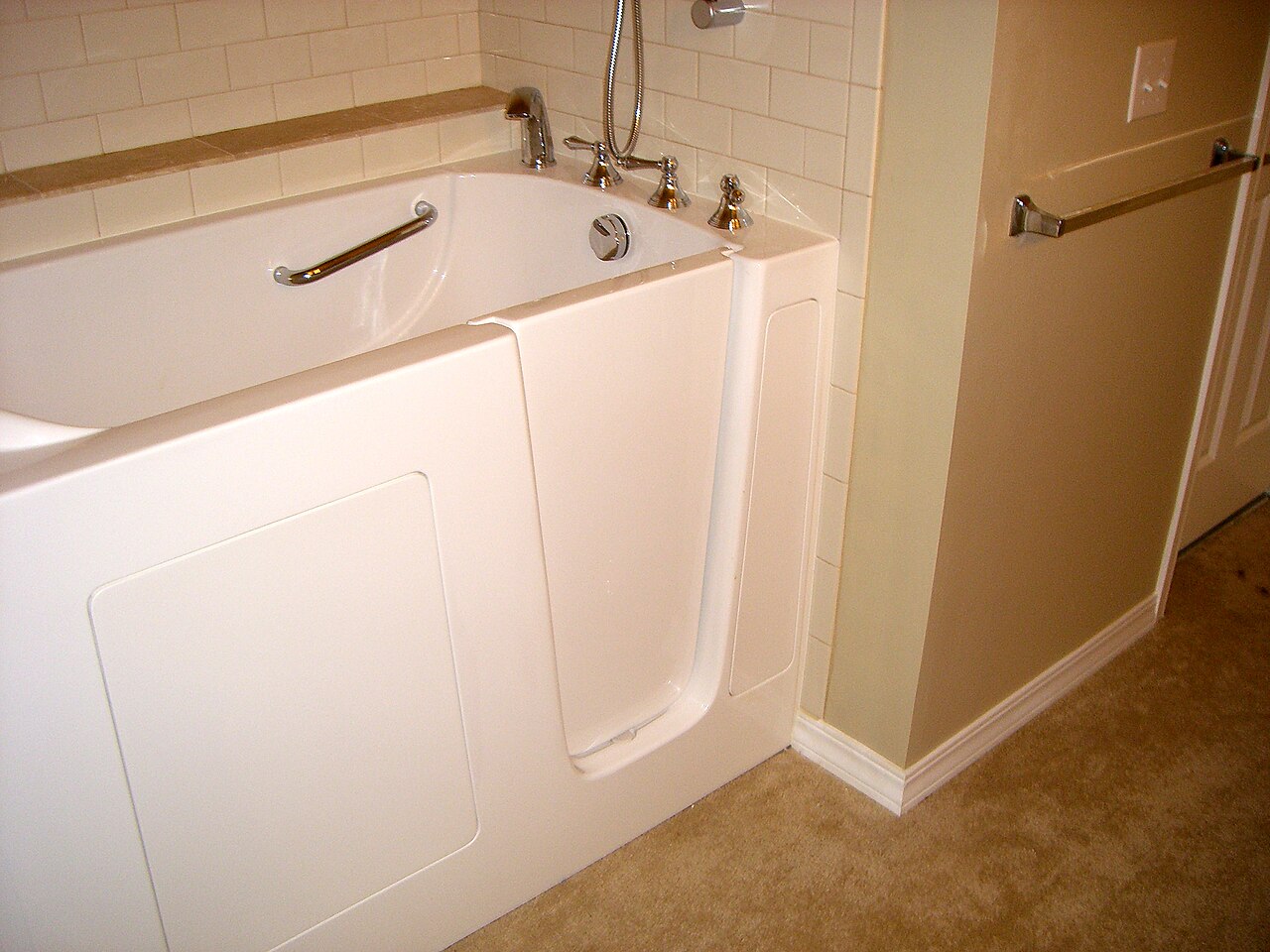
A walk-in tub is a deep tub with a watertight door in the side. You step over a low sill, sit on a molded seat and close the door before filling. Because the door seals the tub, you stay inside until the water has drained, and that wait can feel cold. Some models add jets, which raise the price and the electrical work involved.
A third route costs the least: keep the existing tub and add grab bars, a non-slip mat and a tub transfer bench that lets you sit and swing your legs over the side.
Options at a glance
| Option | Entry | Best for | Main drawbacks |
|---|---|---|---|
| Curbless walk-in shower | No step | Walkers, wheelchairs, anyone unsteady | Floor and drain work; water control needs careful design |
| Low-curb shower conversion | A few inches | People who can lift a foot safely | The curb is still a trip point |
| Walk-in tub | Low sill and door | People who want to soak and can sit and wait | Must sit while it fills and drains; larger water heater demand |
| Existing tub with grab bars and transfer bench | Over the tub wall while seated | Tight budgets, renters, temporary needs | Still requires swinging legs over the wall |
Safety features worth paying for
The Americans with Disabilities Act standards are written for public buildings, not private homes, but they give tested measurements that designers and contractors use as a reference. In the U.S. Access Board's guide to those standards:
- Grab bars sit 33 to 36 inches above the floor, measured to the top of the bar.
- A shower seat is 17 to 19 inches high, close to the height of a wheelchair seat.
- A handheld shower has a hose at least 59 inches long.
- Thresholds in accessible showers are limited to half an inch.
- Standard roll-in showers are at least 60 inches wide and 30 inches deep, and transfer showers are 36 by 36 inches.
At home, the CDC's fall-prevention checklist recommends grab bars next to and inside the tub and next to the toilet, plus a non-slip mat or self-stick strips on the tub or shower floor. Grab bars should be anchored into studs or solid blocking; a towel bar or a suction-cup handle is not a substitute. Other useful details include a thermostatic or pressure-balancing valve to prevent sudden hot water, controls you can reach from the seat, bright even lighting, and a door that swings out or slides so it never traps someone who has fallen.
What drives the cost
There is no reliable national price for either project, because the bathroom you start with drives most of the bill. These are the factors that move the price:
- Plumbing and drain changes. A curbless shower may need the floor lowered or the drain moved, and that is where costs climb fastest.
- Walls and waterproofing. Removing a tub usually exposes walls that need new backing, waterproofing and tile or panels.
- Blocking for grab bars. Adding wood blocking while the walls are open costs little; adding it later means opening finished walls.
- The unit itself. A prefabricated shower base and panels cost less than custom tile; walk-in tubs with jets or heated seats cost more than basic soaking models.
- Water heating and electrical work. A deep walk-in tub holds more water than a standard tub, which can mean a larger water heater, and jetted models need a dedicated circuit.
- Permits and local labor. Plumbing and electrical permits are often required, and labor rates vary by region.
Ask each contractor to price these items line by line, and compare at least two bids. Ask whether the price includes removing the old tub and any wall repair.
Medicare, taxes and other help
Original Medicare does not treat bathroom safety equipment as durable medical equipment. In Medicare's national coverage list, grab bars are denied as self-help devices "not primarily medical in nature," and bathtub seats and bathtub lifts are denied as comfort or convenience items. If you have a Medicare Advantage plan, check its Evidence of Coverage or call the plan, since extra benefits differ from plan to plan.
The tax rules are more helpful. IRS Publication 502 says certain home improvements made to accommodate a disabling condition, including bathroom modifications and grab bars, usually do not increase the value of a home, and their reasonable cost can count in full as a medical expense. You can only deduct medical expenses above 7.5% of your adjusted gross income, and only if you itemize, so ask a tax professional whether it applies to you.
Local home repair and home modification programs, often reached through your Area Agency on Aging, may help with grab bars or a shower conversion for income-eligible owners.
How to choose between a shower and a tub
Start with how the person bathes today and how that may change over the next five to ten years. If they use a walker or wheelchair, or might soon, a curbless shower with a seat is the more adaptable choice, because a caregiver can help from outside the stall. If they love to soak, can sit safely while the tub fills and drains, and do not need help with transfers, a walk-in tub can be worth its trade-offs. Before you commit, ask the doctor whether a home safety evaluation by an occupational therapist makes sense; they can tell you where grab bars and a seat should go for this particular person.
Then measure the space, check whether the floor can be lowered for a curbless entry, and compare the bids. For most households, a well-built walk-in shower with properly anchored grab bars delivers the most safety for the money.
Sources and further reading
- Consumer Product-Related Injuries and Deaths Among Adults 65 Years of Age and Older (2022) — U.S. CPSC
- Check for Safety: A Home Fall Prevention Checklist for Older Adults — CDC
- Guide to the ADA Standards, Chapter 6: Bathing Rooms — U.S. Access Board
- Publication 502, Medical and Dental Expenses — IRS
- Durable Medical Equipment Reference List (NCD 280.1) — CMS