Water Heater Replacement Cost: What Goes Into the Price
Water heater replacement cost explained: the unit, labor, permits, code updates and sizing, with ENERGY STAR price ranges for heat pump models.
Water heater replacement cost depends as much on the installation as on the heater, and labor can come close to the price of the unit itself. For a heat pump water heater replacing a standard electric tank, ENERGY STAR puts the unit at $1,500 to $3,000 and cites contractor estimates of another $1,000 to $3,000 for labor and materials (2024 figures; local prices vary).
Most surprises come from the gap between the shelf price and the final bill. A quote also covers the permit, code updates, venting or wiring changes and hauling away the old tank, and any of these can move the total by hundreds of dollars.
What drives water heater replacement cost
The unit
Type, capacity, fuel and efficiency all change the price. A basic gas or electric tank costs the least up front. Heat pump models cost more, and ENERGY STAR notes that tank size is one of the biggest cost factors: heat pump tanks run from 40 to 80 gallons, and larger tanks sit at the higher end of the range. Tankless units have their own price range and often need extra installation work.
Labor
A plumber drains and disconnects the old heater, carries it out, sets the new one, connects water lines and the gas or electric supply, and tests the system. Swapping the same type in the same spot is the simplest job. An attic or a cramped closet takes longer than an open basement, and hourly rates differ a lot from one region to the next. Hauling away the old tank is often included, but not always.
Permits and inspection
Replacing a water heater needs a permit in many cities and counties, especially for a gas model, because a poor installation can lead to fire, flooding or carbon monoxide. A professional quote often includes the permit fee and the inspection visit. Skipping the permit can make a quote look cheaper, but it may cause trouble when you sell the home or file an insurance claim.
Code updates
An installation that passed inspection 15 years ago may not meet today's local code. Depending on where you live, the job may call for seismic straps, a drain pan with a drain line, a correctly sized temperature and pressure relief valve with a discharge pipe, an expansion tank or new venting for a gas unit. Some local codes and utility programs also require a thermostatic mixing valve. These items explain many of the differences between two quotes for the same heater.
Switching types
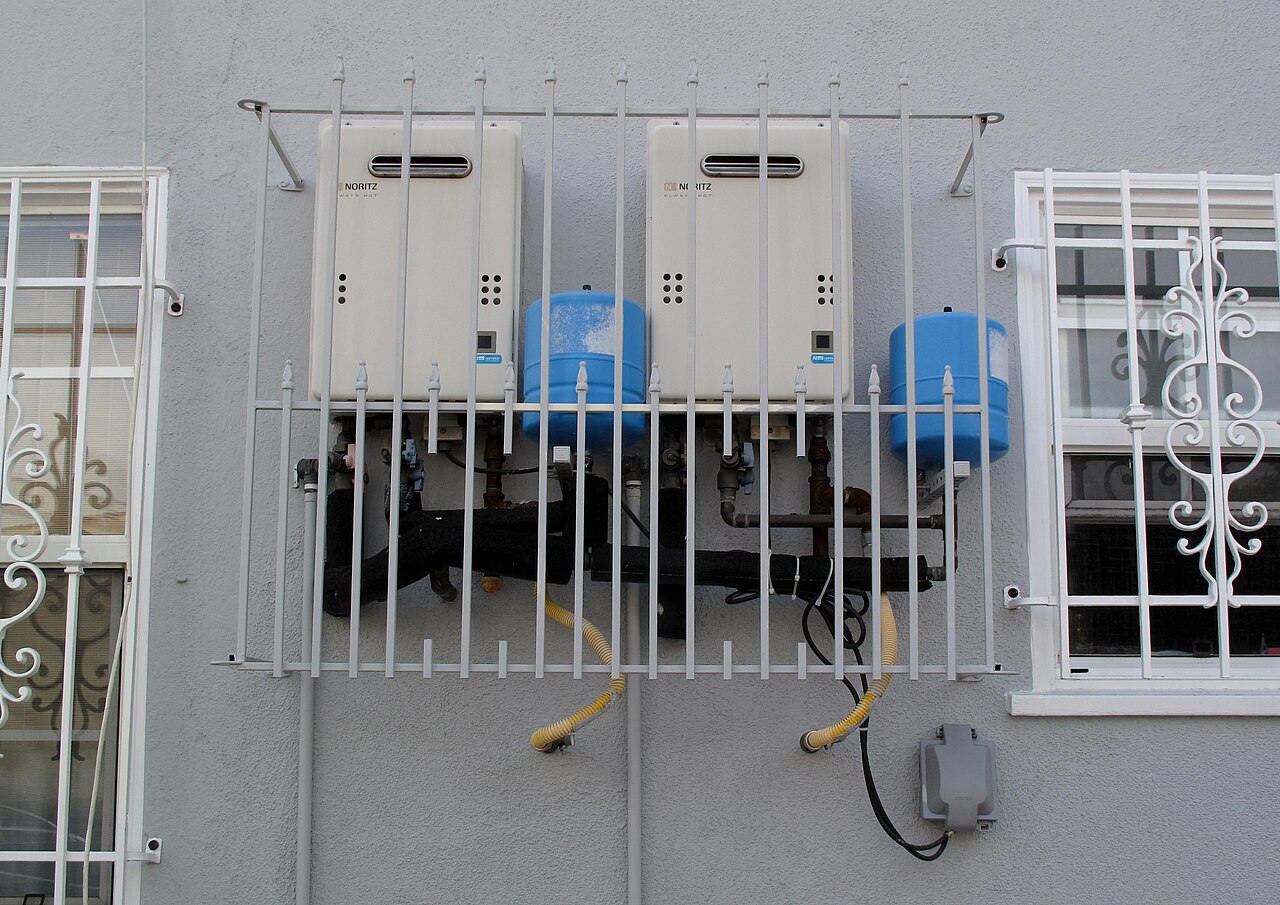
Changing technology adds work. ENERGY STAR advises that a gas tankless installer check whether the existing gas line is large enough and how combustion gases will be vented. A heat pump water heater needs a condensate drain, room to breathe (at least 450 cubic feet of surrounding air for some models, about 1,000 for others) and a 240-volt supply. Moving from gas to a heat pump may also mean an electrical panel upgrade, sealing the old vent opening and capping the gas line.
Comparing the main types
| Type | How it works | Cost picture | Trade-offs |
|---|---|---|---|
| Gas or electric tank | Keeps a tank of water hot at all times | Lowest upfront cost | Standby heat loss; limited by tank size |
| Tankless (on-demand) | Heats water as it flows through | Higher unit and installation cost; gas line or venting may need upgrades | Continuous hot water up to its flow rate |
| Heat pump (hybrid) | Moves heat from surrounding air into the tank | Unit $1,500–$3,000 plus $1,000–$3,000 installation (ENERGY STAR, 2024) | Very efficient electric option; needs space, a drain and a room that stays between 40°F and 90°F |
Efficiency is shown as the Uniform Energy Factor (UEF) in the manufacturer's specifications and in ENERGY STAR listings. The yellow EnergyGuide label gives an estimated yearly energy cost. A higher UEF means lower operating costs for the same amount of hot water, though actual savings depend on local energy prices and household use.
Repair or replace?
A failed heating element, a bad thermostat, a worn anode rod or a pilot light that will not stay lit can often be fixed for far less than a new unit. A plumber can usually tell you in one visit.
ENERGY STAR gives traditional storage water heaters an expected lifespan of 10 to 12 years and heat pump models 13 to 15. Replacement starts to make sense when:
- water is pooling around the base of a tank, which usually means the tank itself has corroded;
- the heater is near or past that age and repairs keep coming;
- hot water runs out much sooner than it used to, or comes out rusty, and flushing has not helped;
- the household has grown or a bathroom has been added.
If your heater is close to that age, plan the replacement ahead of time. A planned job leaves time for several quotes; a leaking tank on a weekend does not.
Sizing: gallons, first-hour rating and flow
Getting the size right matters for the price and for whether the new heater keeps up with your household. For a tank model, the number that matters most is the first-hour rating, which the EnergyGuide label lists as capacity. It estimates how much hot water the heater can deliver in a busy hour starting with a full tank, so two 50-gallon tanks can perform differently.
A simple rule of thumb: if your current heater meets your needs most of the time, a replacement of the same size will probably work. Heat pump models are the exception. When switching from gas, ENERGY STAR suggests sizing up, for example from 40 to 50 gallons or from 50 to 65, so the slower recovery does not leave you short between showers.
Tankless units are rated in gallons per minute (GPM) instead of tank volume. The more often a shower, dishwasher and washing machine run at the same time in your home, the higher the GPM you need. The installer should confirm the size for your house rather than guess from the model name.
Rebates and the end of the federal credit
The federal tax credit that used to cover heat pump water heaters does not apply to equipment placed in service after December 31, 2025. Some utilities and state programs still offer rebates for high-efficiency models, mostly heat pump units. These programs change often and have their own equipment and contractor rules, so check the current terms with your utility or state energy office rather than a sales pitch or a contractor's estimate.
How to choose a type and compare quotes
Start with your space and fuel. If you have a gas tank that works well and no room for changes, a like-for-like replacement keeps installation costs lowest. If you have an electric tank in a garage or basement with enough air around it, a heat pump model costs more now but uses far less electricity. Tankless makes the most sense where space is tight and the gas line and venting can handle it.
Then collect two or more written bids and compare them item by item. Each one should name the brand, model, capacity and UEF, state whether the permit, code updates and haul-away are included, and spell out the warranty and who handles claims. Ask how long you will be without hot water. A lower quote that leaves out the permit or the drain pan usually just moves those costs to later.
The right replacement is the type that fits your space and household size, priced on quotes that cover the same work.